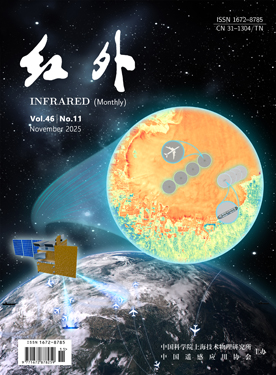
Editor in chief:Sheng-Li SUN
International standard number:ISSN 1672-8785
Unified domestic issue:CN 31-1304/TN
Domestic postal code:4-290
- Most Read
- Most Cited
- Most Downloaded
2025, 46(12):1-9. DOI: 10.11972/j.issn.1672-8785.2025.12.001
Abstract:This article begins by reviewing the necessity and early development of space infrared astronomical observations. It highlights that the two major scientific themes driving further development in the near- and mid-infrared bands are cosmological research and exoplanet detection. The article then introduces the James Webb Space Telescope (JWST) — the most significant current near- and mid-infrared mission — outlining its key technical features and major breakthroughs achieved in these research areas. Furthermore, it discusses the Euclid space telescope and the Nancy Grace Roman Space Telescope (RST). These missions, whose primary scientific objectives are surveying cosmological parameters, feature mosaic near-infrared focal planes with extremely large fields of view. The Atmospheric Remote-sensing Infrared Exoplanet Large-survey (ARIEL) mission is also highlighted for its specialized design to acquire near- and mid-infrared spectra of exoplanet atmospheres. Additionally, the article surveys other operating, developing, or planned missions, including SPHEREx, EXCITE, Pandora, JASMINE, GaiaNIR, NEO Surveyor, and the Habitable Worlds Observatory (HWO). Finally, the article notes that while far-infrared technology has progressed more slowly — with missions like SPICA and Origins not yet realized — the Probe Far-Infrared Mission for Astrophysics (PRIMA) holds the promise of filling the "far-infrared gap".
JIANG Bing-qian , LI Qi-long , FENG Si-jia , ZHANG Jian , CHEN Jun
2025, 46(12):10-22. DOI: 10.11972/j.issn.1672-8785.2025.12.002
Abstract:Optical imaging, with its advantages of being radiation-free, simple to operate, high spatiotemporal resolution, and real-time imaging, is widely used in the life sciences. Among these, short-wave infrared (SWIR) imaging technology is a recent emerging research hotspot in optical imaging, and its significant potential in in vivo animal biological function research and clinical translation has expanded the medical research and clinical applications of optical imaging. This article systematically reviews the progress of SWIR imaging applications in in vivo animals, including cellular-level tracing, real-time dynamic visualization of the vascular system, and dynamic monitoring of specific pathophysiological processes. It also focuses on the recent clinical translational advancements of SWIR imaging, particularly its advantages and potential in surgical navigation applications. With the continuous optimization and development of contrast agents (such as fluorescent probes) and imaging equipment (such as multimodal imaging), SWIR imaging holds immense potential for future applications in precision medicine research and clinical diagnosis and treatment.
WANG Jun-jun , XU Da-zhao , ZHANG Tao , YUAN Yong-chun , WANG Lin-jun , GAO Wen-ting , YAN Xiao-jun , TIAN Qing , ZHENG Wei-bo
2025, 46(12):23-35. DOI: 10.11972/j.issn.1672-8785.2025.12.003
Abstract:In recent years, the integration of microphysiological systems (including organoids and organ-on-a-chip) with advanced in-orbit detection technologies is driving a fundamental transformation in the research paradigm of space life sciences. This paper systematically reviews the advantages of microphysiological systems in mimicking the three-dimensional structure and physiological functions of human organs, and summarizes their application practices on platforms such as the International Space Station, covering research progress and key findings in multiple tissue models, including brain, bone, and immune tissue. It also provides a detailed review of the latest developments in in-situ detection technologies such as high-content fluorescence imaging, light-sheet microscopy, Raman spectroscopy, and nanopore sequencing. Furthermore, it analyzes major current challenges in the field, including limited technology integration, a lack of long-term culture systems, and insufficient multi-modal data fusion. Finally, it looks ahead to the future development direction of intelligent and integrated space experimental platforms, emphasizing that the deep integration of multi-modal sensing, artificial intelligence, and automation methods will propel space life science research into a new stage of multi-scale, systematic, and precise analysis.
CHEN Jian-xin , ZHOU Yi , XU Zhi-cheng , BAI Zhi-zhong , HUANG Min , DING Rui-jun , HE Li
2025, 46(12):36-46. DOI: 10.11972/j.issn.1672-8785.2025.12.004
Abstract:Antimonide superlattice infrared detectors have advantages such as good uniformity, low dark current, and high quantum efficiency. Furthermore, due to their flexible and tunable energy band structure, they can cover a detection wavelength range of 3-30 μm, making them a preferred technology for realizing high-performance short-wave, mid-wave, long-wave, and two-color infrared detectors. The Shanghai Institute of Technical Physics (SITP), Chinese Academy of Sciences, began developing superlattice infrared focal plane array technology during the 11th Five-Year Plan period. Over the past decade, SITP has achieved systematic breakthroughs and progress in superlattice energy band structure design, epitaxial growth of materials, focal plane array chip fabrication, dark current suppression in long-wave devices, and the engineering and industrialization of superlattices. Starting from the basic technical principles of antimonide superlattices, this paper summarizes the research progress of SITP in superlattice infrared detectors and provides a preliminary discussion of future development trends.
WU Zhi-xu , HU Xin-yu , ZHONG An-dong , GAO Zhen-xiang , XIA Yong , LI Zheng-yang
2025, 46(12):47-66. DOI: 10.11972/j.issn.1672-8785.2025.12.005
Abstract:Short-wave infrared (SWIR) imaging technology has broad application prospects in industry, medicine, and consumer electronics. However, traditional detectors such as indium gallium arsenide (InGaAs) are limited by high cost, limited spectral response range, and the difficulty in balancing high resolution and miniaturization, hindering their large-scale application. Colloidal quantum dots, a class of solution-processable low-dimensional semiconductor nanomaterials, possess unique quantum confinement effects that enable precise spectral tuning in the 1.0-3.0 μm wavelength range. They exhibit good compatibility with complementary metal-oxide-semiconductor (CMOS) processes and flexible substrates, opening a new path for the development of low-cost, high-performance SWIR detection technology. This paper systematically reviews the working principle, performance parameters, and latest research progress of quantum dot SWIR detectors both domestically and internationally. It focuses on their application potential in areas such as material defect detection, semiconductor monitoring, agricultural and food analysis, biomedical imaging, and mobile device integration, and also provides an outlook on future technological development and industrialization challenges.
ZhangChangxing , WangShengWei , WangYueMing , ZhangEn , YaoYi , HanGuiCheng , ZhangDong , ZhuangXiaoQiong , HeDaoGang , XueQing , ShiHaiGang
2025, 46(12):67-75. DOI: 10.11972/j.issn.1672-8785.2025.12.006
Abstract:Thermal pollution from nuclear power plant thermal discharge is a significant environmental concern in the sustainable development of nuclear energy. Airborne infrared remote sensing technology, with its unique advantages such as high sensitivity, high resolution, and quantitative inversion capabilities, has become an important monitoring method in this field. Based on the analysis of key performance indicators of airborne infrared observation of thermal discharge, this paper systematically reviews the development history and typical applications of airborne infrared monitoring of thermal discharge both domestically and internationally, and elaborates on core aspects such as radiometric calibration, geometric correction, and temperature inversion. Building an integrated space-air-ground collaborative monitoring network and deeply integrating artificial intelligence technology are inevitable trends in promoting the operationalization and intelligentization of nuclear power plant thermal discharge monitoring in China.
Editor in chief:Sheng-Li SUN
International standard number:ISSN 1672-8785
Unified domestic issue:CN 31-1304/TN
Domestic postal code:4-290